
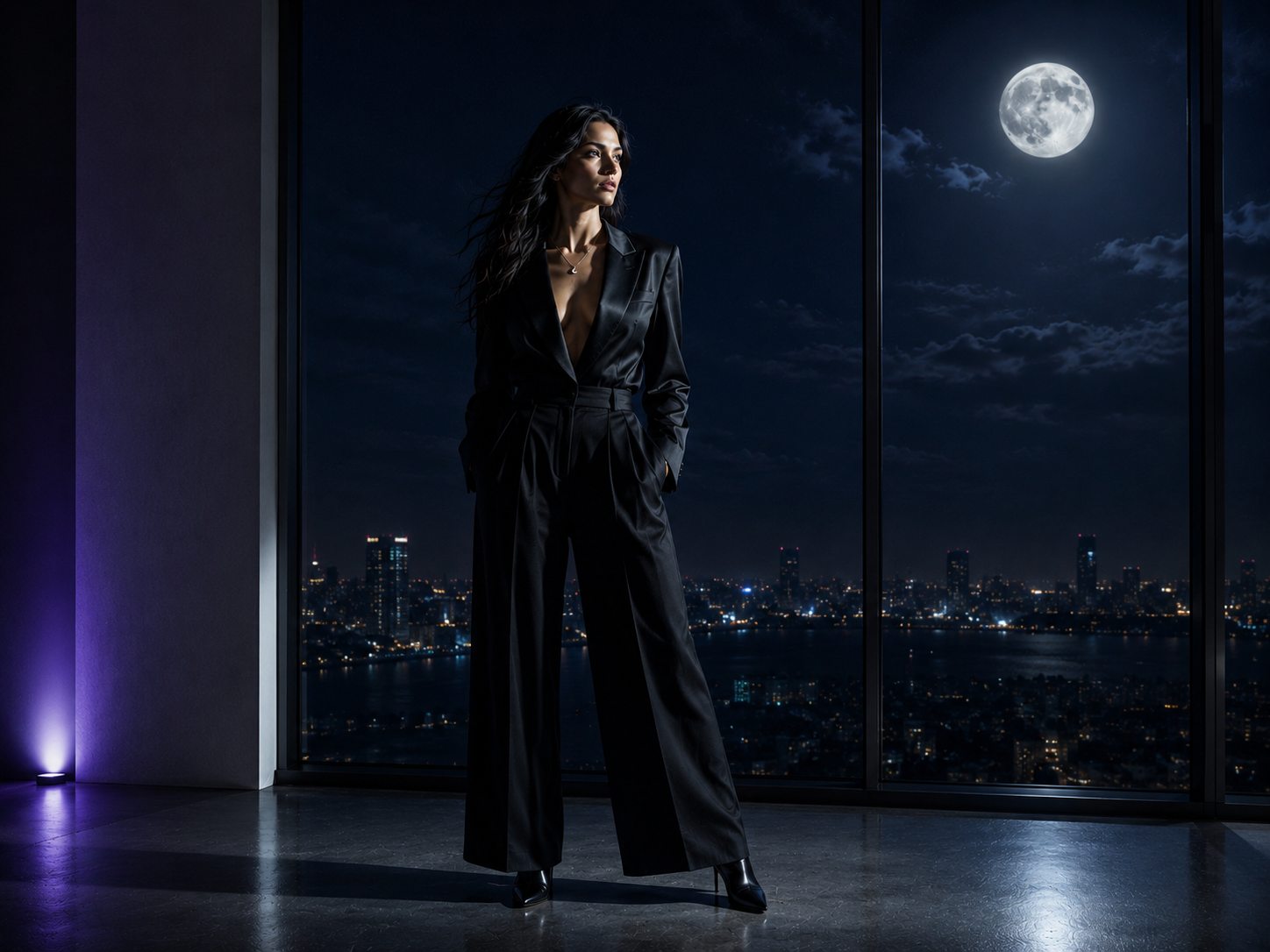
Witchcore Outfitsfor the Dark Feminine Aesthetic
Somewhere between TikTok’s WitchTok corner and the Halloween aisle, witchcore got confused with costume. And honestly, that confusion makes sense — the aesthetic has visible markers that are easy to over-rely on. The moon phases. The dark textures. The celestial motifs. Stack enough of them in one place and suddenly you’re not making an intentional style choice; you’re dressed for a themed party.
But witchcore, at its root, has nothing to do with Halloween. And the dark feminine aesthetic it so naturally overlaps with has even less to do with it.
This guide is for the woman who has always felt a pull toward this world — toward symbolism as dressing, toward the dark palette, toward pieces that carry quiet meaning — but has struggled to find where the line is between aesthetic and costume. It’s a line worth understanding. Once you do, the whole space opens up differently.
We’ll cover what both aesthetics actually mean, where they meet and how they differ, the seven wardrobe pieces that anchor them both, and the styling principles that keep any witchcore outfit firmly in intentional territory.
✦ The Complete Deck at a Glance
What Witchcore Really Means
Witchcore is an aesthetic movement, not a Halloween category. Its visual vocabulary borrows from the centuries-old imagery of folk magic, herbalism, lunar ritual, and the archetype of the wise woman — but it filters all of that through a contemporary lens.
At its core, witchcore is about the symbolic dimension of everyday life. It finds meaning in the ordinary: the way moonlight falls across a stone surface, the weight of a specific ring worn daily, the ritual of brewing something slowly and with full attention. The clothing that belongs to this worldview follows the same logic — pieces that feel personally charged, that carry symbolic resonance without advertising it to everyone in the room.
The aesthetic shares DNA with dark academia (the pursuit of hidden knowledge through beautiful things), cottagecore (the intimacy of handmade and botanical life), and goth (the honest embrace of shadow and depth). But it isn’t exactly any of those things. Witchcore is specifically concerned with intention, symbol, and ritual as lived daily practice — not as performance, costume, or cultural moment.
What witchcore is: dark fabrics with texture and depth. Celestial motifs worn close to the body. References to moon cycles, botanical life, and familiar spirits. An atmosphere of knowing that comes through in styling choices rather than printed-on declarations.
What witchcore is not: witch hats as accessories, pentagram-covered everything, cauldron imagery, green smoke aesthetics, or any visual language borrowed from fantasy film or seasonal costuming. Those associations exist — and WPC doesn’t dismiss them entirely — but they represent the costume version of this world, not the lived one.
The version of witchcore that aligns with WPC’s world — and with the dark feminine aesthetic — is the stripped-down one. The one that trusts symbolism to do quiet work.
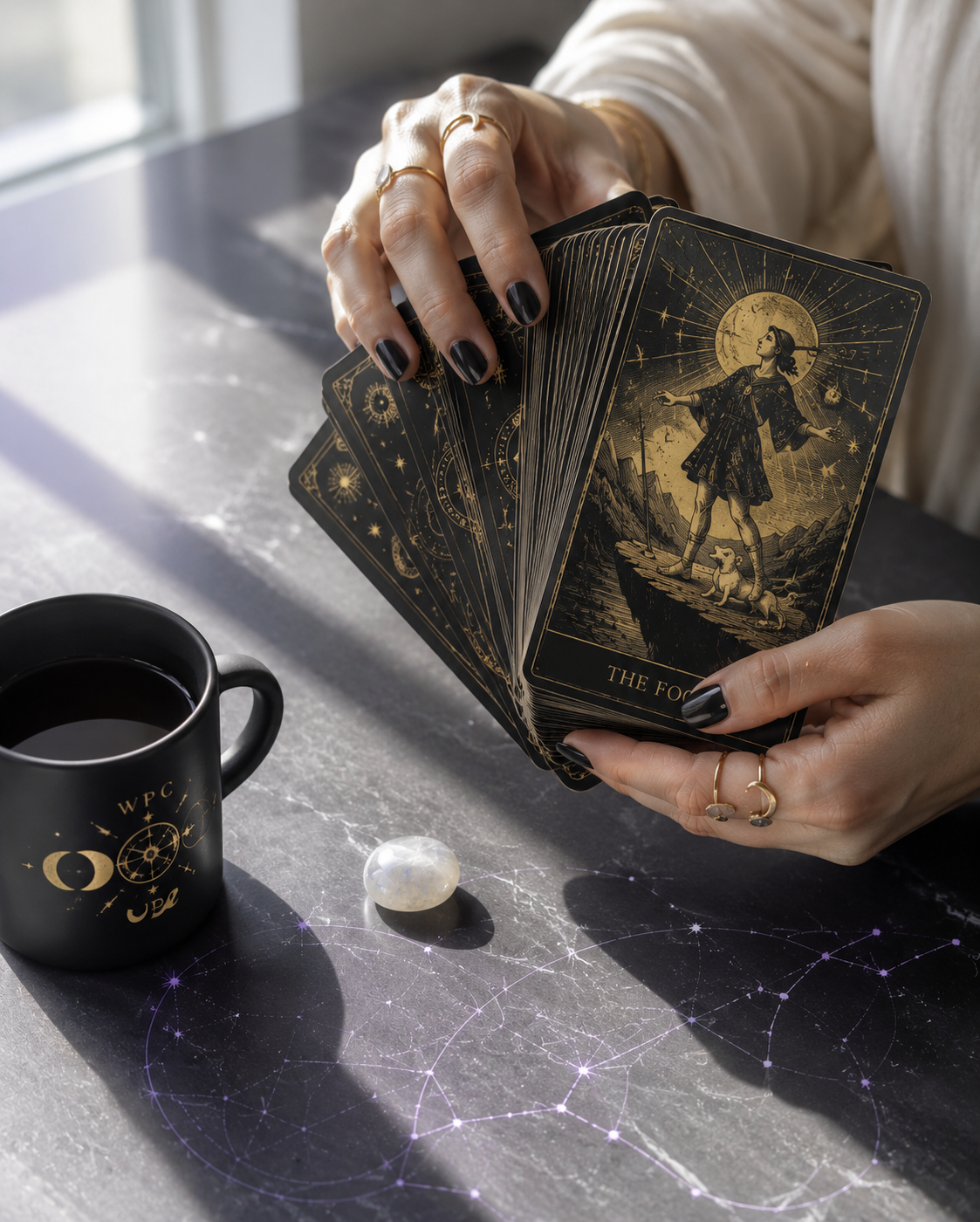
The Dark Feminine Aesthetic Defined
Dark feminine is an archetype before it’s an aesthetic. It describes a quality of presence — one that is grounded in power without apology, mystery without performance, and depth without darkness for its own sake.
The term borrows from Jungian psychology’s concept of the feminine shadow archetype: the aspects of the self that are powerful, instinctive, deeply knowing, and unafraid of the parts of life that others look away from. In modern fashion and style culture, it’s been translated into a remarkably consistent visual language.
In clothing terms, the dark feminine aesthetic means: structural silhouettes. Rich, weighted materials — velvet, satin, leather, heavy-draped knits. A colour palette that centers black, deep navy, and charcoal, with carefully selected accents of gold or amethyst. Jewelry that carries weight, both literally and symbolically. And a general absence of anything overly decorative, trend-chasing, or busy.
Importantly, the dark feminine aesthetic is not about looking wounded, broken, or gothic in the theatrical sense. It is not about darkness as rebellion or provocation. It is about a woman who moves through her life with the quiet authority of someone who has chosen every piece she is wearing with full awareness — and would make exactly the same choices whether or not anyone else understood them.
Where witchcore brings the symbolic vocabulary — the moon, the familiar, the celestial detail — dark feminine brings the posture. The structural confidence. The architectural clarity of a silhouette that does not need to explain itself to anyone.
The dark feminine aesthetic is a woman who moves through her life with the quiet authority of someone who has chosen every piece she is wearing — and would make the same choices whether or not anyone else understood them.
Together, the two aesthetics create something that sits at the exact intersection WPC was built to serve: beautiful, symbolic dressing for a woman who approaches her wardrobe with the same intentionality she brings to any other ritual in her life.
Where They Meet — and Why It Matters
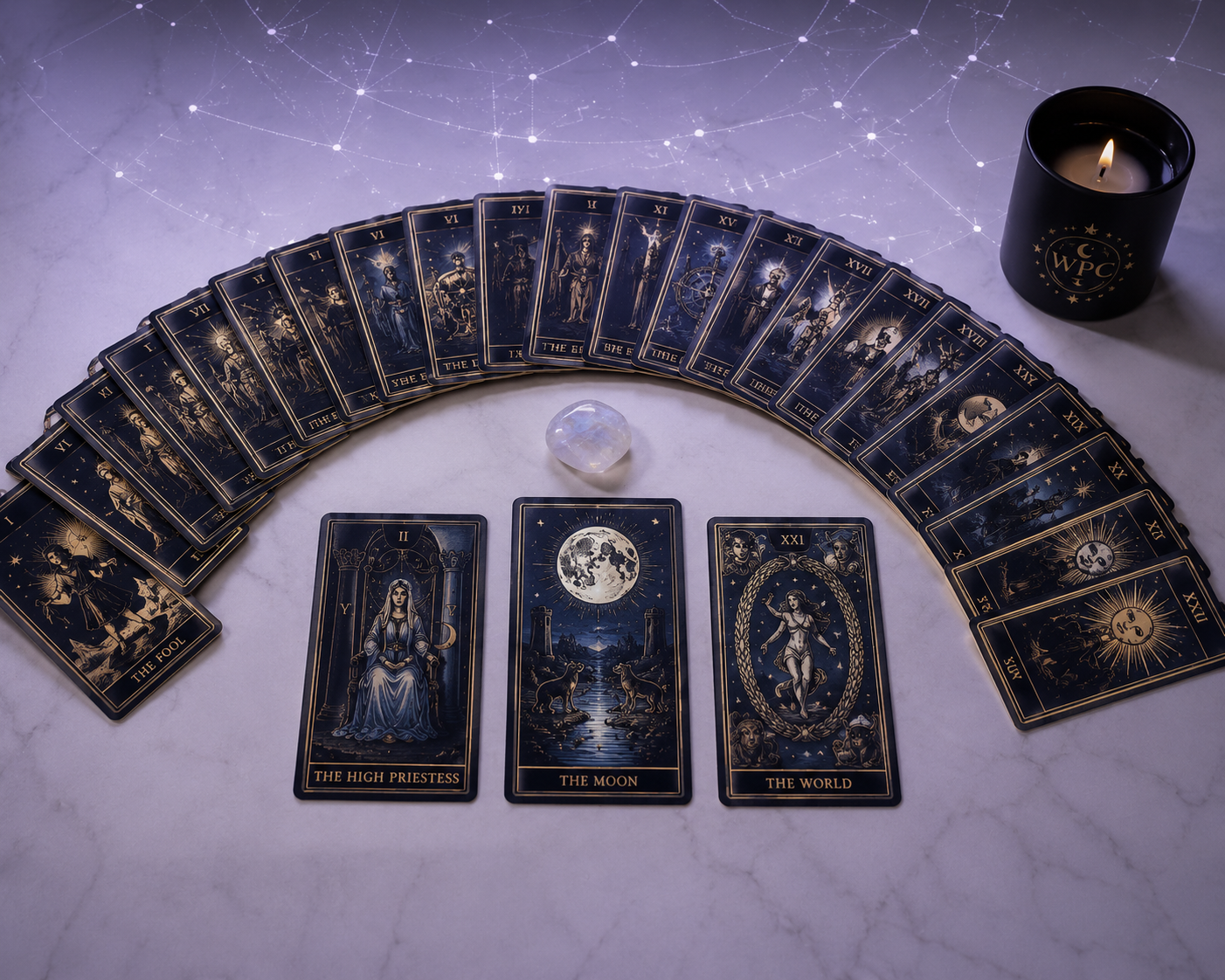
Neither aesthetic needs to exclude the other. In practice, the most fully realized looks in both categories tend to borrow freely across the line between them.
Witchcore without dark feminine can veer into theatrical territory. Too many symbols, not enough structural grounding — the energy of a mood board assembled, rather than a wardrobe built. The witchcore pieces have the right vocabulary but no architecture to organize them around.
Dark feminine without witchcore, on the other hand, can feel stripped of the symbolic warmth that makes it feel personal rather than simply severe. The silhouette is there, the authority is there — but the connection to meaning, to the private ritual logic that makes this aesthetic feel like more than a fashion choice, can be missing.
The intersection is where each balances the other. Witchcore’s moon ring grounds the dark feminine blazer and makes it feel like an expression of something interior, not just a fashion choice. The dark feminine’s structural coat prevents the witchcore velvet skirt from tipping into theatricality. The aesthetic becomes layered without becoming cluttered. Intentional without becoming cold.
At WPC, we think of these as overlapping communities rather than distinct categories. The woman drawn to one almost always has one eye on the other. And the wardrobe that serves both aesthetics well is one built with very specific principles in mind — principles the rest of this guide is here to establish.
The Line Between Intention and Costume
There is a single principle that separates a witchcore outfit that feels powerful from one that reads as costume: the costume version announced itself.
Think about the distinction in practice. A moon ring worn on one hand, paired with an otherwise clean black ensemble, communicates a quiet, private relationship with lunar symbolism. It feels personal. Three moon necklaces, a moon-print top, a pentagram choker, and a wide-brimmed hat worn together communicate that you’ve assembled a theme. And themes are costumes. Personal symbols are style.
The version of this aesthetic we’re building toward is always the latter — pieces chosen for their relationship to your own symbolic logic, not for their legibility to an outside audience.
This distinction matters beyond aesthetics. It’s also the practical difference between a wardrobe that ages beautifully and one that exhausts you. Intentional foundational pieces — a black velvet midi skirt, a well-constructed dark blazer, a single celestial necklace — work across seasons, contexts, moods, and decades. Themed pieces only land when the full costume is assembled, and they date visibly.
In any single look, allow one piece to carry the symbolic weight of the aesthetic. One moon ring. One celestial necklace. One velvet texture. That piece does the communicating for the whole outfit.
Every piece in The Familiar Collection was designed with this rule in mind. Each item is built to be that anchor — the piece that does the quiet, powerful communicating in whatever outfit it joins.
The 7 Wardrobe Pieces That Anchor Both Aesthetics
These are not trend pieces. They are foundational wardrobe investments — chosen for their ability to serve a witchcore dark feminine aesthetic across every season, context, and occasion. Each one carries the aesthetic without requiring a full costume to activate it.
Tarot & Divination Goods
Decks, journals, and divination tools curated for the practitioner who reads with both knowledge and intuition — for every stage of the practice.
Waxing Crescent — The Courage to Begin
First action
Courage
Momentum
Hope
You don’t have to start at the beginning. You just have to start. The cycle is already in motion — it has been waiting for you to join it.
Witch’s Potion Cauldron
First Quarter — The Decision Point
First action
Courage
Momentum
Hope
This is the most uncomfortable phase of the lunar cycle, and knowing that in advance is itself a form of magic. The first quarter moon — a perfect half-circle — arrives approximately one week after the new moon, and with it comes the first real test of the intention you set. Something will push back. An obstacle appears, enthusiasm fades, the practical reality of what you are trying to build becomes clear. The temptation to abandon, revise, or explain away the intention arrives precisely here.
Waxing Gibbous — The Practice of Trust
Refinement
Adjustment
Patience
Trust
The waxing gibbous is the moon’s most misunderstood phase — the almost-full that can feel like a tease. Energy is high, momentum is real, but the fullness has not yet arrived. This is the phase of refinement: you are working with your intention rather than toward it now, adjusting your approach, troubleshooting, staying in motion without forcing the outcome.
The ritual practice of the waxing gibbous is subtle: it is the practice of patient trust. Continue the work. Notice what needs adjustment and adjust without panic. The moon is almost full — your intention is almost ready to be seen in the world. Hold steady.
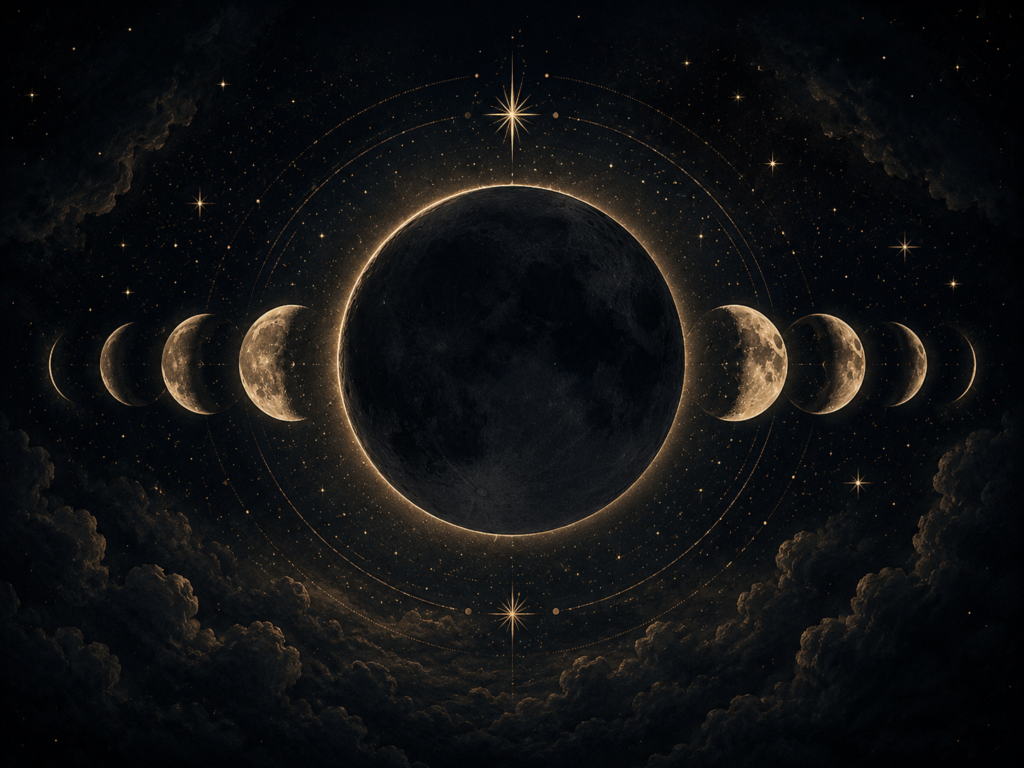
Full Moon — Illumination and Release
Peak energy
Visibility
Celebration
Release
Harvest
The full moon is the most energetically charged night of the lunar cycle — and the most frequently misunderstood. Popular moon content often treats the full moon as a night of dramatic spellwork and high ceremony. The truth is at once simpler and more powerful: the full moon illuminates. Whatever has been growing in the dark — in your relationships, your creative work, your interior life, your intentions — becomes visible now. The full moon reveals what the new moon seeded.
The full moon has two simultaneous energetic qualities that seem contradictory until you understand they are two sides of the same peak. It is the moment of harvest — celebrating what has grown, acknowledging what you have accomplished in the two weeks since your new moon intention. And it is the moment of release — consciously letting go of whatever is no longer serving the next cycle of growth.