
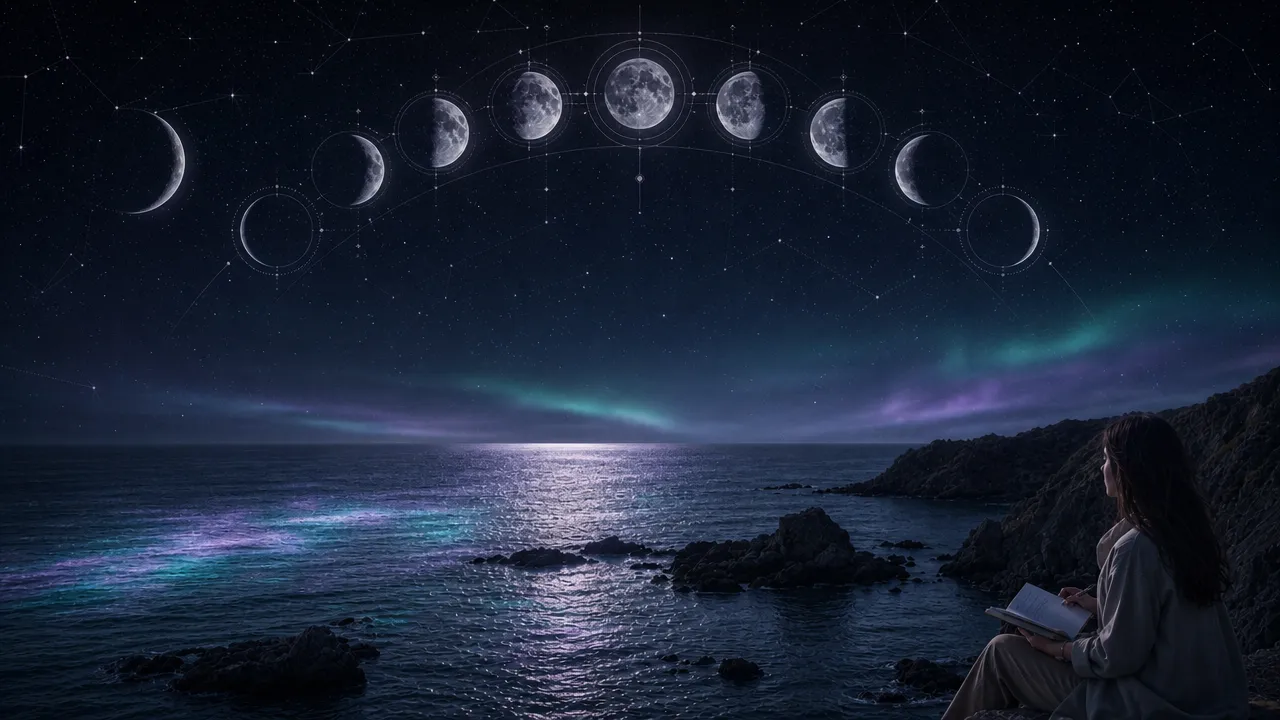
Beginner’s Guide to Moon Phase Magic
Moon phase magic for beginners starts here: learn how each of the 8 lunar phases influences your energy, rituals and intentions, and exactly what to do on each one.
Every month, the moon completes a journey that the Earth’s oldest cultures used as a calendar, a planting guide, a ritual map, and a mirror for the inner life. You don’t need to be an advanced practitioner to work with it. You need only to begin, to look up, to notice which phase is overhead, and to understand what that phase is asking of you. This guide gives you everything required to start that practice tonight.
What follows is a complete moon phase magic for beginners walkthrough of all eight lunar phases, not as abstract mystical concepts, but as practical energetic states, each with its own quality of attention, its own natural ritual gesture, and its own place in the continuous rhythm of growth, peak, release, and renewal that the moon has been demonstrating, patiently, every 29.5 days for the entirety of human existence.
Jump to a Moon Phase

What Is Moon Phase Magic for Beginners, Really?
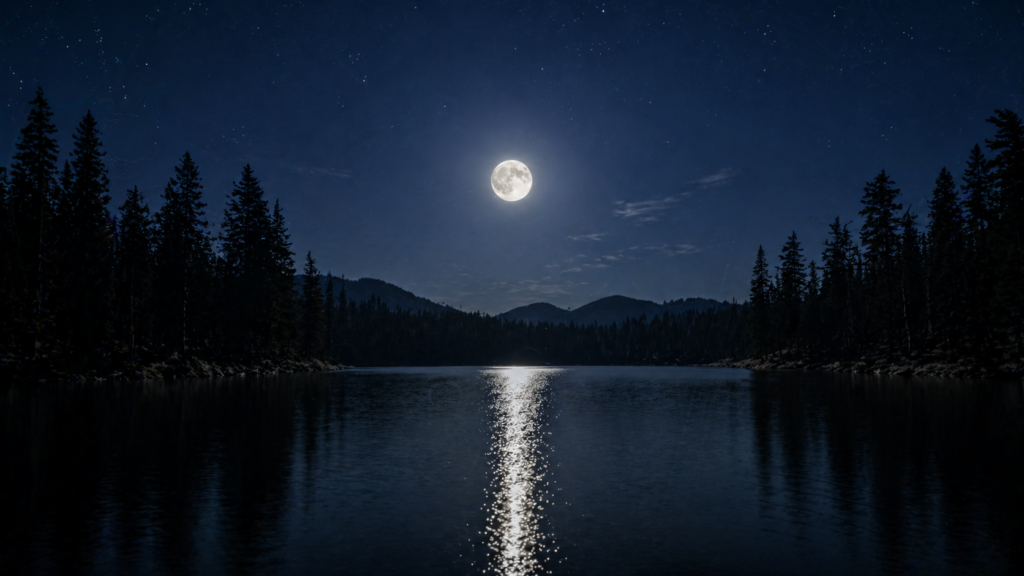
At its most fundamental, moon phase magic is the practice of aligning your intentions, actions, and rituals with the natural energetic cycle of the lunar month. It operates on a principle that runs through every agricultural tradition, every ocean tide, and every woman’s body: natural cycles have phases, and each phase has its own distinct quality of energy. Working with those phases rather than against them is not superstition, it is the most ancient form of ecological intelligence humans possess.
The moon does not create your circumstances. It does not grant wishes or punish inaction. What it offers is something more useful: a built-in, monthly rhythm for the practices of intention-setting, sustained action, peak expression, and deliberate release, the four movements of any meaningful undertaking. This is the core of moon phase magic for beginners: the lunar calendar is simply a way to stop doing all four simultaneously, which is what most people do most of the time, and start doing them in sequence.
The Quick Reference: All 8 Phases at a Glance
Before we go deep into each phase, here is your complete lunar map. Return to this table every month as a quick orienting reference.
| Phase | Energy | Ritual Gesture |
|---|---|---|
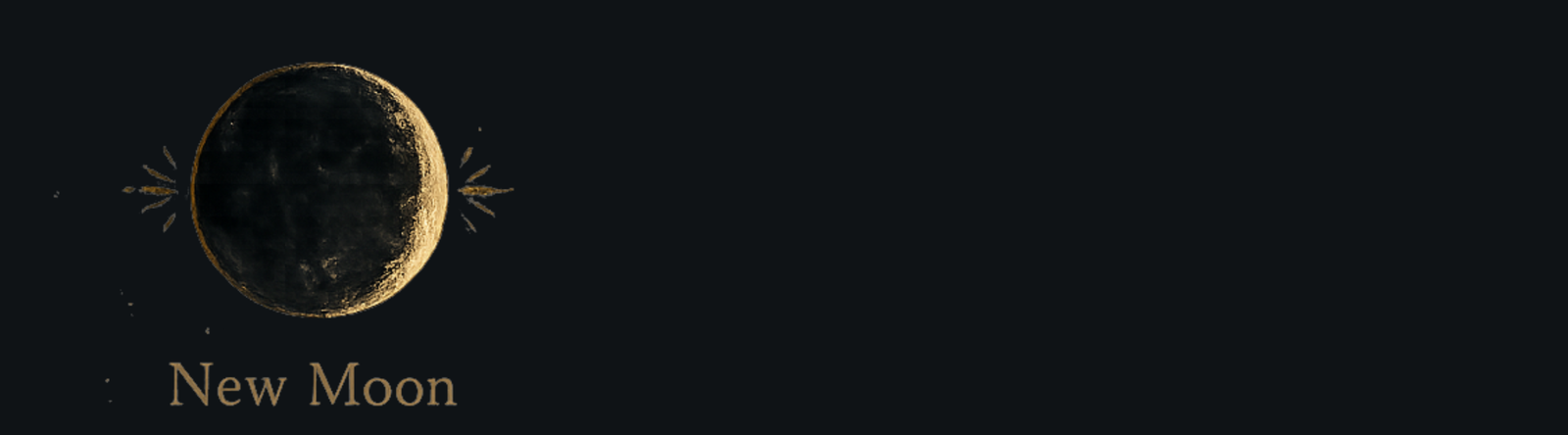
| New Moon | Seeds & intention | Write, plant, begin |
| Waxing Crescent | Momentum & courage | Take the first action |
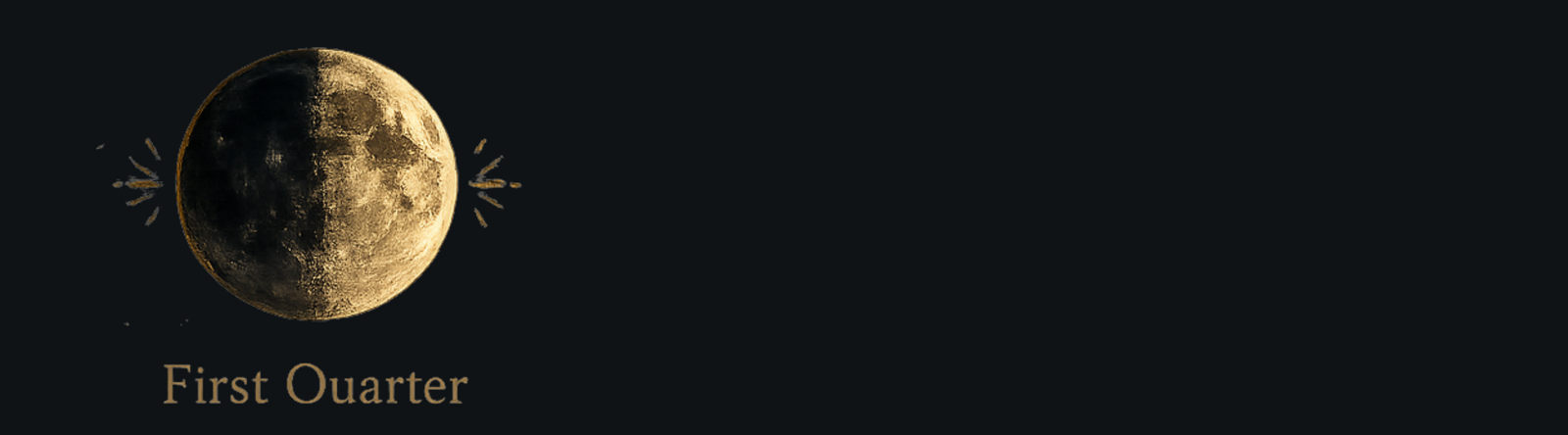
| First Quarter | Decision & will | Push through resistance |
| Waxing Gibbous | Refinement & trust | Adjust, refine, persist |
| Full Moon | Peak & illumination | Release, celebrate, see clearly |
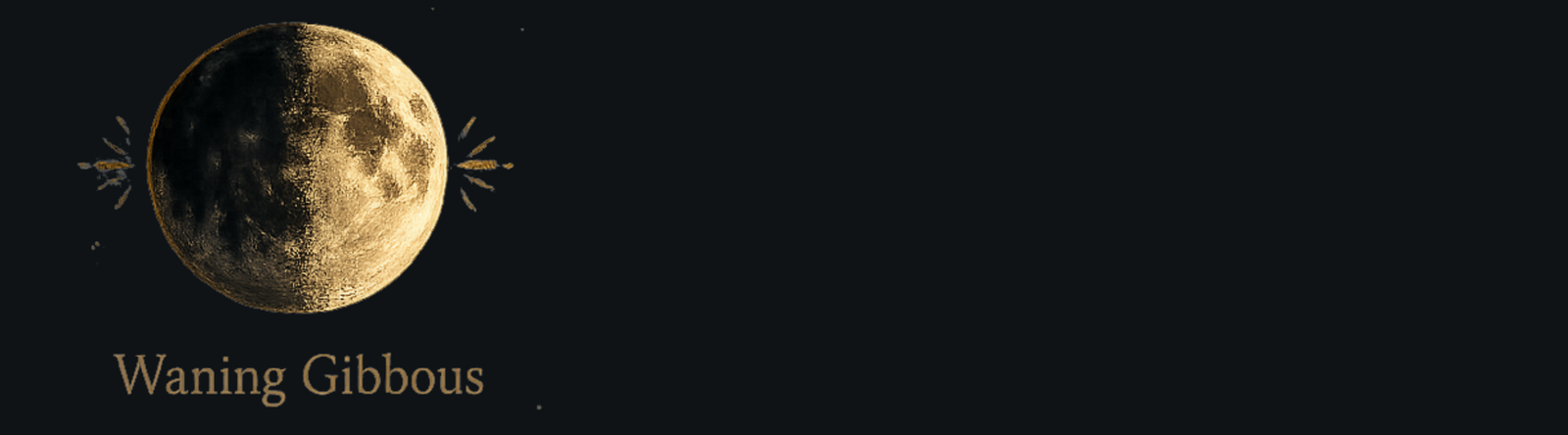
| Waning Gibbous | Gratitude & sharing | Receive, give thanks |
| Last Quarter | Forgiveness & release | Let go of what didn’t work |
| Waning Crescent | Rest & renewal | Sleep, reflect, do nothing |
New Moon: The Art of Beginning
Intention
Planting
Quiet power
Inner vision
The new moon is the darkest night of the month, the sky holds no reflected light, and the world is asked to look inward. This is not an absence. It is the condition in which seeds germinate: in the dark, underground, before any visible growth. The new moon is not a time for action or declaration. It is a time for the quieter, more difficult work of knowing what you actually want.
Intentions set at the new moon carry particular potency, not because of mystical timing, but because the new moon forces a kind of honesty. Without the energetic heat of the full moon, without the momentum of the waxing phases, you are left alone with your own clarity or its absence. What do you want to call into your life over the next 29 days? Answer that question carefully, and you have your new moon practice.

Waxing Crescent: The Courage to Begin
First action
Courage
Momentum
Hope
Three to four days after the new moon, a thin crescent appears in the evening sky, the first visible light of the new cycle. This is the phase of the first step. Not the plan, not the strategy, not the preparation, the single concrete action that takes your intention off the journal page and into the world.
The waxing crescent asks only one thing of you: choose one action, however small, and take it today. Send the email. Sign up for the class. Buy the seeds. Make the call. The size of the action is irrelevant; the fact of it is everything. The waxing crescent is the phase that separates intentions that live into intentions that only float.
First Quarter: The Decision Point
First action
Courage
Momentum
Hope
This is the most uncomfortable phase of the lunar cycle, and knowing that in advance is itself a form of magic. The first quarter moon, a perfect half-circle, arrives approximately one week after the new moon, and with it comes the first real test of the intention you set. Something will push back. An obstacle appears, enthusiasm fades, the practical reality of what you are trying to build becomes clear. The temptation to abandon, revise, or explain away the intention arrives precisely here.
“The first quarter is not a sign that your intention was wrong. It is confirmation that it was real enough to meet resistance. Only intentions that don’t matter go unchallenged.”
The first quarter ritual is not complicated: it is simply the decision to continue. Write in your journal about the resistance you are meeting, name it specifically, and then write the sentence: “I choose to continue.” That act of naming and recommitting is the entire practice.
Waxing Gibbous: The Practice of Trust
Refinement
Adjustment
Patience
Trust
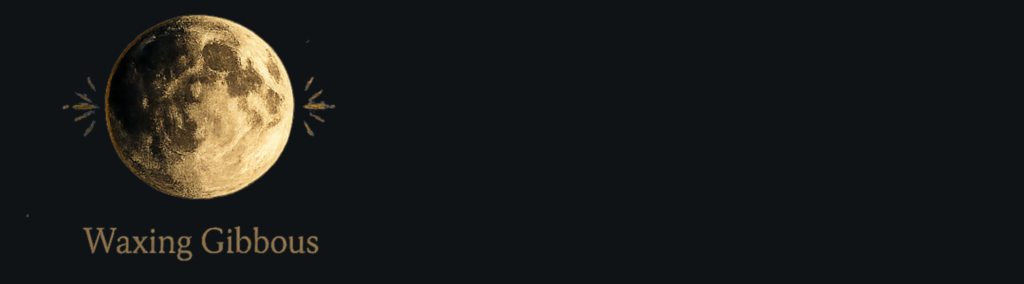
The waxing gibbous is the moon’s most misunderstood phase, the almost-full that can feel like a tease. Energy is high, momentum is real, but the fullness has not yet arrived. This is the phase of refinement: you are working with your intention rather than toward it now, adjusting your approach, troubleshooting, staying in motion without forcing the outcome.
The ritual practice of the waxing gibbous is subtle: it is the practice of patient trust. Continue the work. Notice what needs adjustment and adjust without panic. The moon is almost full, your intention is almost ready to be seen in the world. Hold steady.
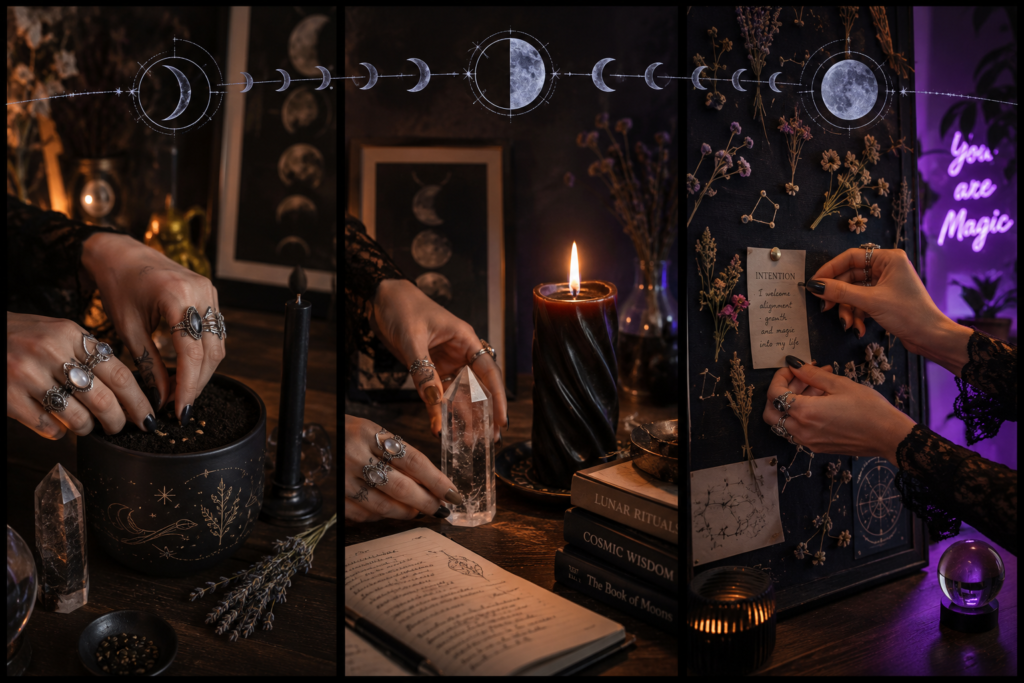
Full Moon: Illumination and Release
Peak energy
Visibility
Celebration
Release
Harvest
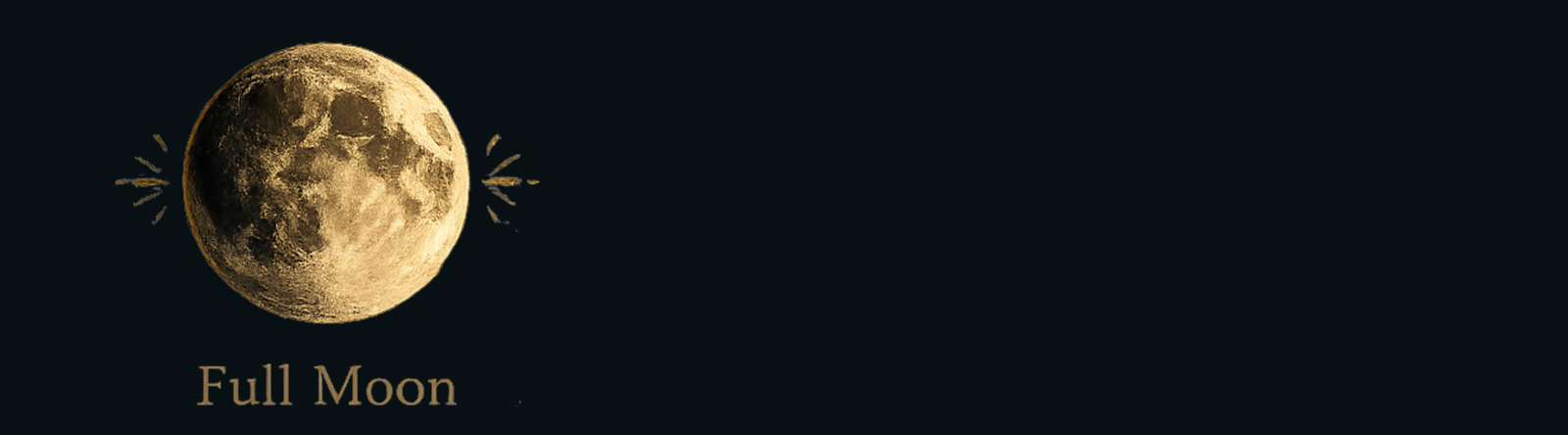
The full moon is the most energetically charged night of the lunar cycle, and the most frequently misunderstood. Popular moon content often treats the full moon as a night of dramatic spellwork and high ceremony. The truth is at once simpler and more powerful: the full moon illuminates. Whatever has been growing in the dark, in your relationships, your creative work, your interior life, your intentions, becomes visible now. The full moon reveals what the new moon seeded.
The full moon has two simultaneous energetic qualities that seem contradictory until you understand they are two sides of the same peak. It is the moment of harvest, celebrating what has grown, acknowledging what you have accomplished in the two weeks since your new moon intention. And it is the moment of release, consciously letting go of whatever is no longer serving the next cycle of growth.

The Most Common Full Moon Mistake
The most common beginner error with full moon practice is treating it as a second new moon, setting new intentions, starting new projects, making new plans. The full moon is not a beginning. It is a peak and a completion. Trying to plant seeds at the full moon is like trying to plant a garden at midday in summer: the energy is too high, too exposed, too charged for new beginnings. Save your intentions for the new moon. Give the full moon what it is actually asking for: your honesty, your gratitude, and your willingness to let go.
Waning Gibbous: The Art of Receiving
Gratitude
Sharing
Integration
Generosity
The waning gibbous phase begins in the days immediately following the full moon, as the bright disk begins its gradual dimming. This is the phase that most moon practices neglect entirely, and it is one of the richest. The waning gibbous is the energetic equivalent of the day after a feast: you are full, slightly overwhelmed, and beginning to integrate what the full moon illuminated.
The ritual practice here is gratitude, not as a performance, but as a genuine act of energetic receiving. What arrived this cycle? What grew? What did the full moon show you? Write it. Say it aloud. Share it with someone you trust. The waning gibbous is also the best phase of the cycle for generosity, giving back what you have received, sharing knowledge, resources, and attention with your community.
Last Quarter: The Practice of Forgiveness
Forgiveness
Release
Clearing
Honest reckoning
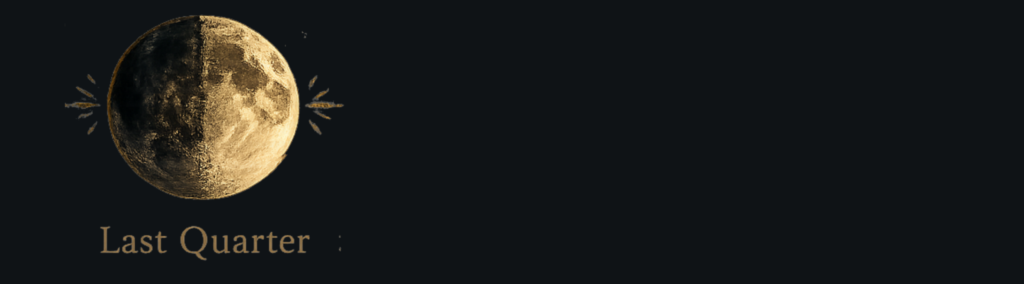
Three weeks into the cycle, the last quarter moon appears as a perfect half-circle mirror of the first quarter, but this time, the lit side is on the left, and everything is moving toward darkness rather than toward light. The last quarter is the phase of genuine, difficult releasing: not the symbolic burning of the full moon, but the deeper work of letting go of what did not work this cycle and forgiving yourself, and others, for it.
This is the phase for clearing: your physical space, your digital spaces, your mental and emotional backlog. What conversations need to happen? What resentments are you carrying into the next cycle unnecessarily? What commitments have you been holding out of obligation rather than genuine intention? The last quarter asks you to set them down.
Waning Crescent & Dark Moon: Rest Is the Ritual
Rest
Reflection
Emptying
Surrender
Renewal
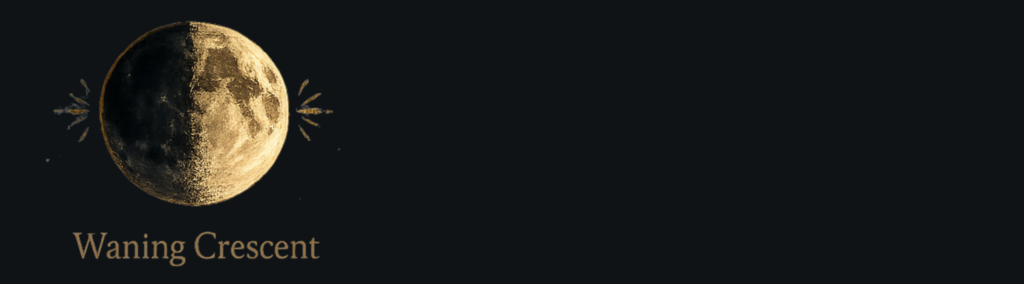
The waning crescent, often called the dark moon in its final, barely-visible days, is the phase that modern life is most aggressively designed to prevent you from honoring. In a culture that measures worth through productivity and visibility, the dark moon’s invitation is almost radical: stop. Rest. Do not produce anything. Simply be.
This is the emptying before the new beginning. Every creative tradition, every agricultural system, every healthy biological organism requires a fallow period, a phase of apparent inactivity that is actually the precondition for everything that comes next. The dark moon is not a failure to be productive. It is the field lying empty, rebuilding its fertility for the next season’s planting.

Permission to Do Nothing: Three Gentle Practices for the Waning Crescent
The full-cycle review:
Before the new moon returns, read back the intention you set 28 days ago. What grew? What didn’t? What surprised you? Write three sentences, no more. Let the cycle speak for itself.
The clearing walk:
Walk slowly outside, no phone, no destination. Notice what has changed in the natural world around you since the last new moon. Return home and declutter one small drawer or surface. Physical clearing creates interior space.
The nothing practice:
One evening during the dark moon, do nothing intentional. No ritual, no journaling, no practice. Just exist. This is, counterintuitively, the hardest and most important practice in the entire lunar cycle, and the one that makes all the others possible.
✦ Your Moon Practice Toolkit
What You Actually Need to Begin
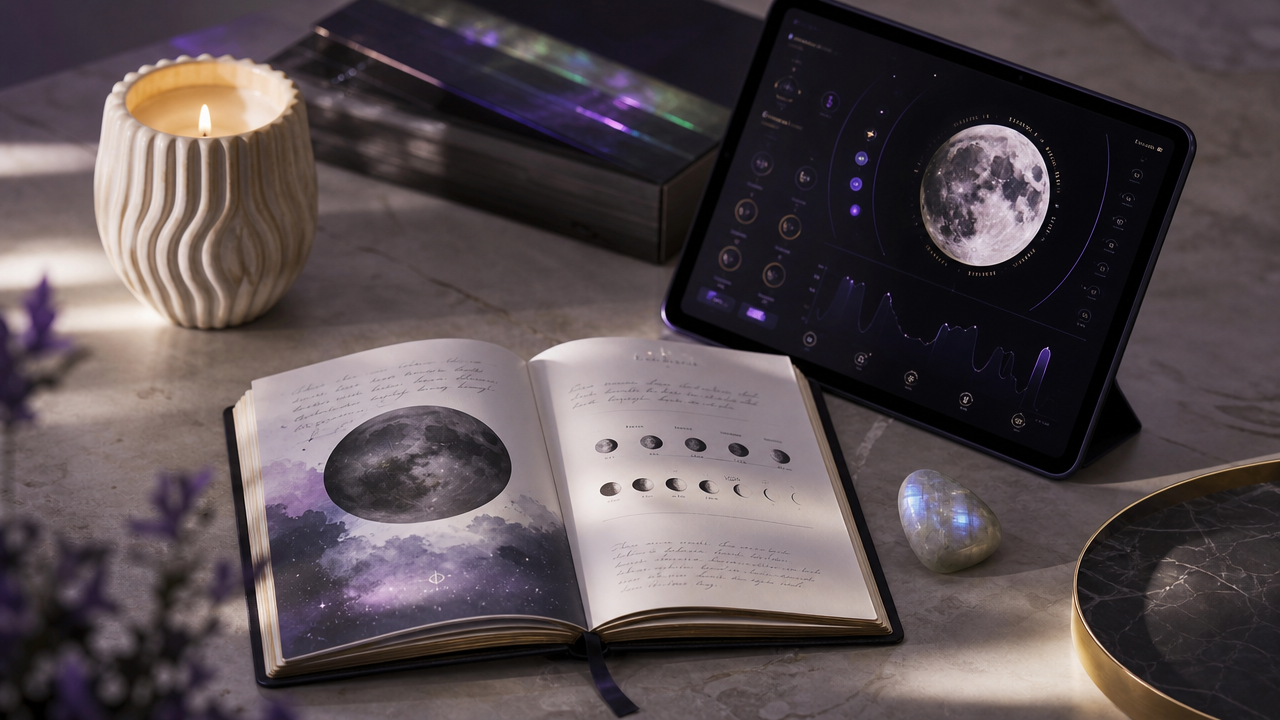
The moon phase magic practice described in this guide requires almost nothing material to begin. A journal. A candle. A quiet space. The willingness to look up. Everything else is an enrichment of a practice that is already complete in its simplest form.
That said, the tools you choose to work with do matter, not because they create the magic, but because they create the conditions in which you are most likely to return to the practice, month after month. Beautiful, meaningful objects earn a place in your daily life. They become anchors for intention. A candle that smells extraordinary becomes the thing that makes you want to sit down and pull your journal out on a cold night when inertia says otherwise.

A Dedicated Moon Journal
Keep your moon cycle work separate from your daily journal. The dedicated space creates ritual significance and makes it easy to read back full cycles over time.
Ritual Candles by Phase
Black or deep indigo for new moon, silver or white for full moon, dark green for waxing phases, grey or lilac for waning. The color is a physical anchor for the energetic shift.
A Moonstone or Clear Quartz
Moonstone is the traditional stone of lunar work, it amplifies intuition and emotional clarity. Clear quartz is a universal amplifier that works powerfully for intention-setting.

The Complete Moon Practice Collection
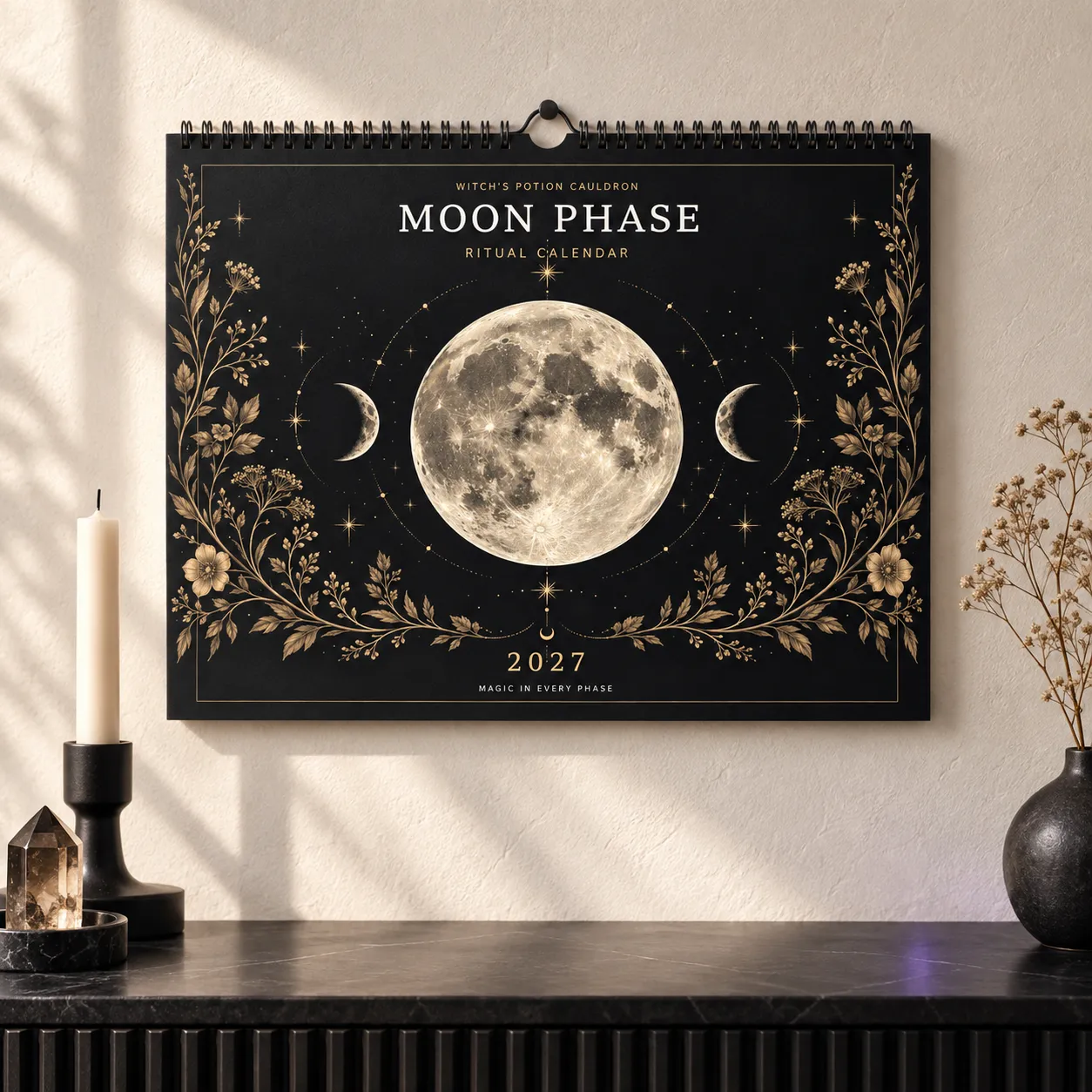
Learning the lunar phases is only the beginning. The 2027 Moon Phase Ritual Calendar helps you follow each phase, plan your intentions, and build a consistent practice throughout the year.
✦ One Last Thing
You Already Know This
Every person who has ever felt an inexplicable restlessness at the full moon, or a quiet turning-inward as the month goes dark, or a surge of energy with the new crescent, you already know this practice. You have been living it without a framework. This guide has simply given you the language for something your body has always understood.
Begin with the next moon phase, whatever it happens to be tonight. You do not need to start at the new moon, though that is the natural beginning. Pick up the cycle wherever you are in it, do what that phase asks, and observe. The moon will complete its cycle again in 29.5 days. And then again. And then again.
It always does.
You don’t have to start at the beginning. You just have to start. The cycle is already in motion, it has been waiting for you to join it.